Whale Season at Waikoloa, When They Arrive and Where to Watch
The short answer
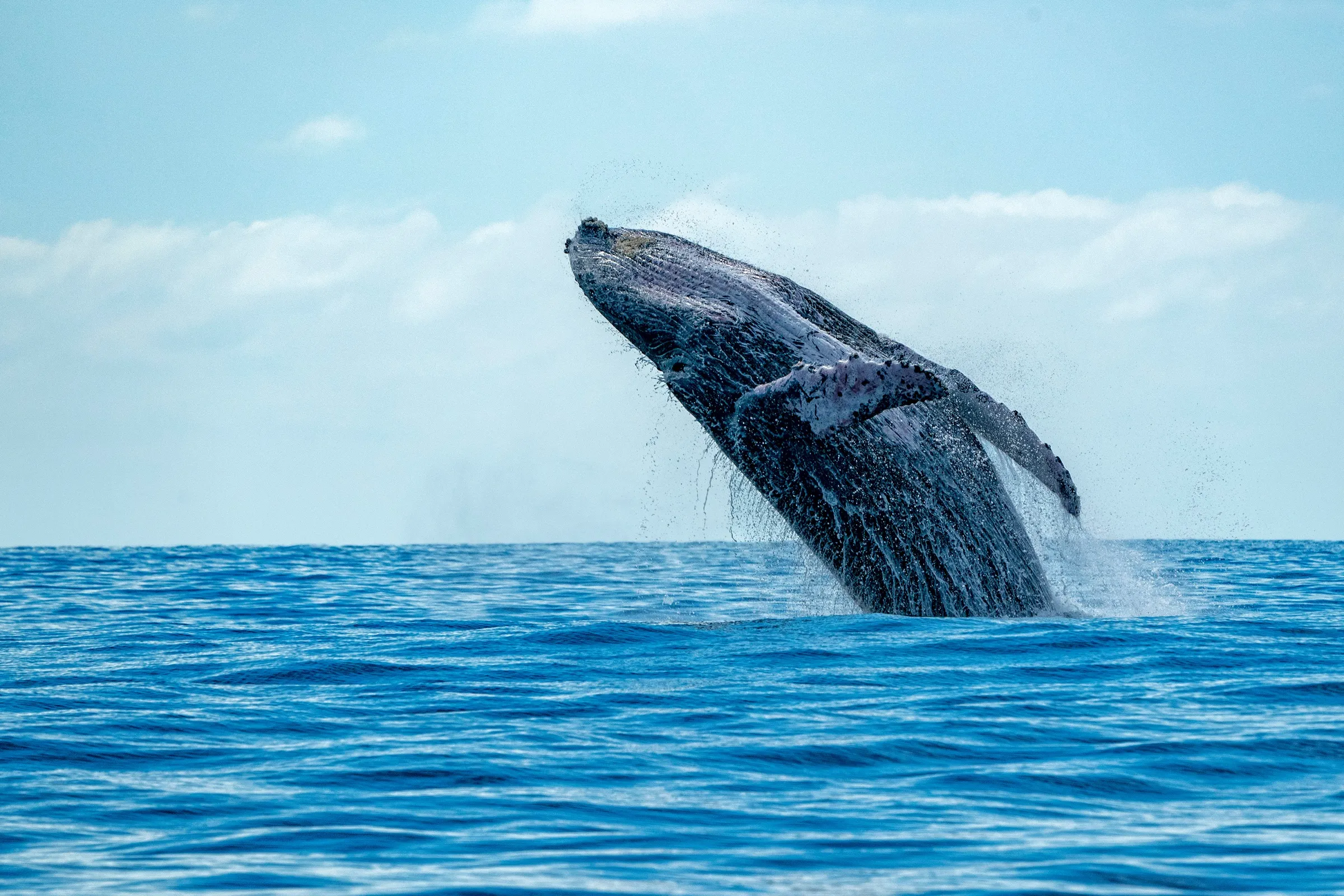
Humpback whales are off the Kohala Coast from November through April, with the first arrivals usually showing up in late November and the peak from January through March. The best part for our guests: you do not need a boat to see them. The oceanfront bluff inside Hali’i Kai and the rail at the Ocean Club both look straight out over the whales’ migration path, so spouts and breaches show up with your morning coffee, no charter required.
When the whales are here
The season has a shape to it, slow to build, sharp at the peak, slow to fade. Here is roughly what to expect month by month.
| Month | What to expect |
|---|---|
| November | Late arrivals begin, first spouts of the season |
| December | Numbers building steadily |
| January | Peak season |
| February | Peak season, often the busiest weeks |
| March | Peak season |
| April | Last reliable sightings as the season winds down |
Whale season is one of the stronger reasons to choose winter dates, though it is not the only thing that shifts through the year. Our guide to planning a Hawai’i Island vacation sets the whales alongside the rest of the calendar, including the calmer summer water and the quiet shoulder weeks.
Watching from shore at Hali’i Kai
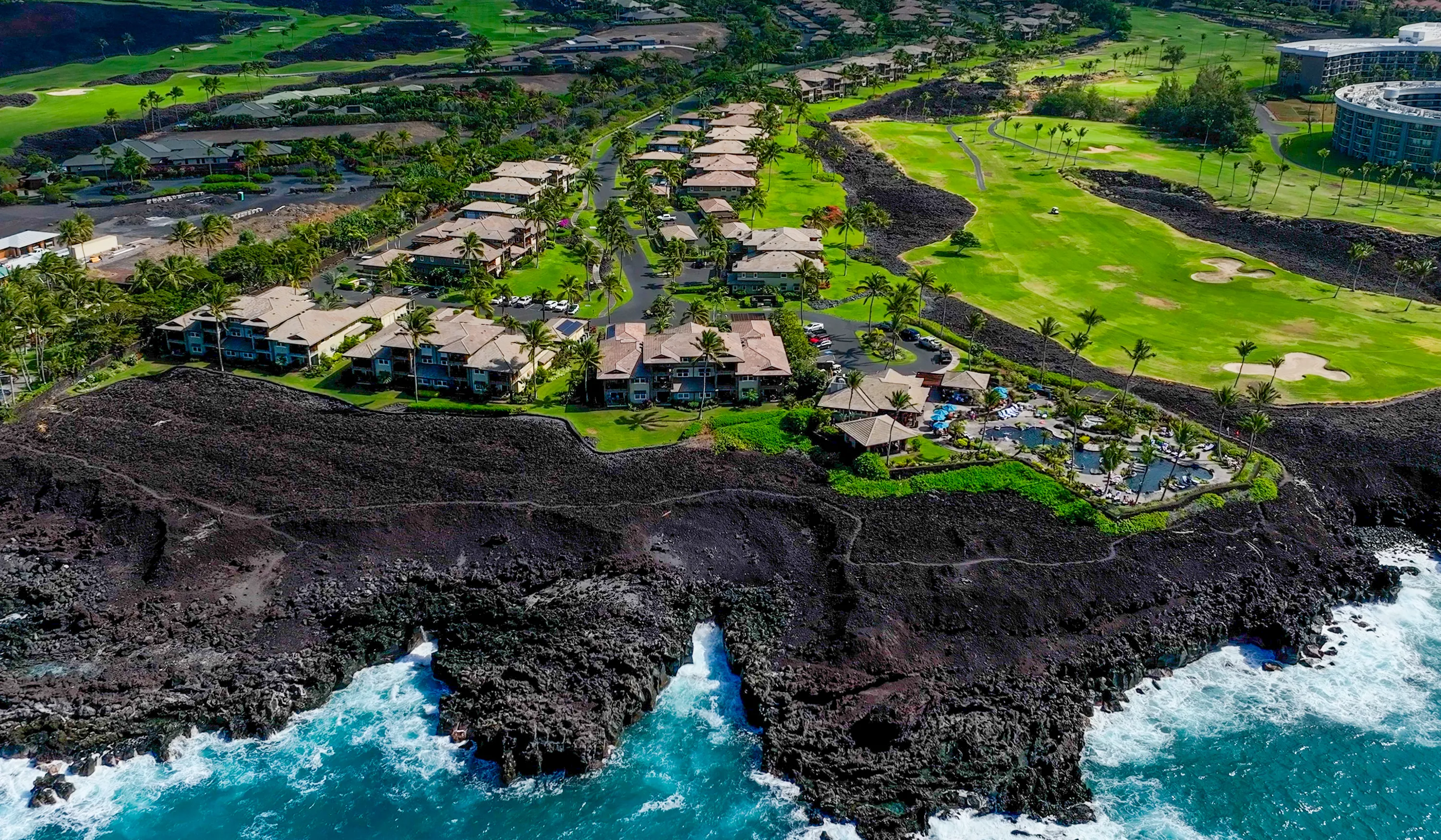
Hali’i Kai’s property line runs along an oceanfront bluff, and in whale season it doubles as one of the best vantage points on this coast. The resort map shows how the shoreline row sits within the community. No ticket, no boat, nothing between you and the water but a good pair of eyes. Step outside with your coffee and scan the horizon; a spout is usually the first sign, and if you are patient, a full breach follows more mornings than not in peak season.
The rail at the Ocean Club offers the same view with a sunset dinner attached, since the restaurant sits right on the same stretch of shoreline. The fitness hale and pool are open from 6am if you would rather watch from a treadmill, and their hours run later than the kitchen’s. Either spot works; the difference is really whether you would rather lean on the rail with a coffee or a cocktail.
Mornings are the calmest window on this coast, less wind, glassier water, sharper eyes for catching a spout before it disappears. If you are up before the trades pick up, that is prime bluff time. With that said, the whales love choppy water and windy days. Intense weather sometimes means even more active performances.
Boat tours
For a closer look than any shoreline offers, whale watching by boat departs from ‘Anaeho’omalu Bay and Kawaihae, both a short drive from Hali’i Kai. Boats can close the distance in a way shore viewing cannot, and a good captain reads the water for where the whales are most active that morning. Our concierge can point you to the operators running that week and the departure time that tends to find the calmest seas.
Morning tours are generally the better bet, for the same reason shore viewing favors mornings: calmer water, more active whales, and a smoother ride out.
Photographing them
A phone camera catches a spout easily enough but rarely a breach, they happen fast, often just outside a wide frame, and are gone before autofocus catches up. A camera with real zoom, 300mm or more if you have it, gives you a fighting chance at freezing the moment.
Morning light does double duty here: it is kinder to photographs, low and warm rather than the flat overhead glare of midday, and it lines up with when the whales tend to be most active. Set up on the bluff with coffee, camera ready, and let the first spout tell you where to point it.
Frequently asked questions
When is peak whale season on the Kohala Coast?
Peak season runs January through March, often busiest in January and February. The season itself runs November through April, with the first arrivals usually showing up in late November.
Can you see whales from shore at Hali'i Kai?
Yes. The oceanfront bluff inside Hali'i Kai and the Ocean Club's rail both look straight out over the whales' migration path, so spouts and breaches are visible without a boat, binoculars, or reservation of any kind.
Do I need a boat tour to see whales?
No. Shore viewing at Hali'i Kai is free and, in peak season, reliably active on its own. A boat tour gets you closer and adds the chance of an underwater encounter, worth doing if you want more than a distant spout, but it is not required to see whales during your stay.
What is the best time of day to watch for whales?
Morning. The water is usually calmer before the trade winds pick up, and whales tend to be more active early in the day. Coffee on the bluff or the Ocean Club rail before nine is a good habit to start in whale season.
Do whales breach close to shore?
Often, yes. The channel off this coast runs close enough that breaches, tail slaps, and pec fin slaps are visible with the naked eye from the bluff, especially in peak months. Whales are wild animals, so nothing is guaranteed on any single morning, but many days in season bring at least one show.