Hawai'i Island: An Honest Guide to What the Big Island Is Like
Hawai’i Island is larger than every other Hawaiian island put together, and fewer people live on the whole of it than fill one mid-sized mainland suburb. Almost everything that makes a vacation here different comes back to that one fact.
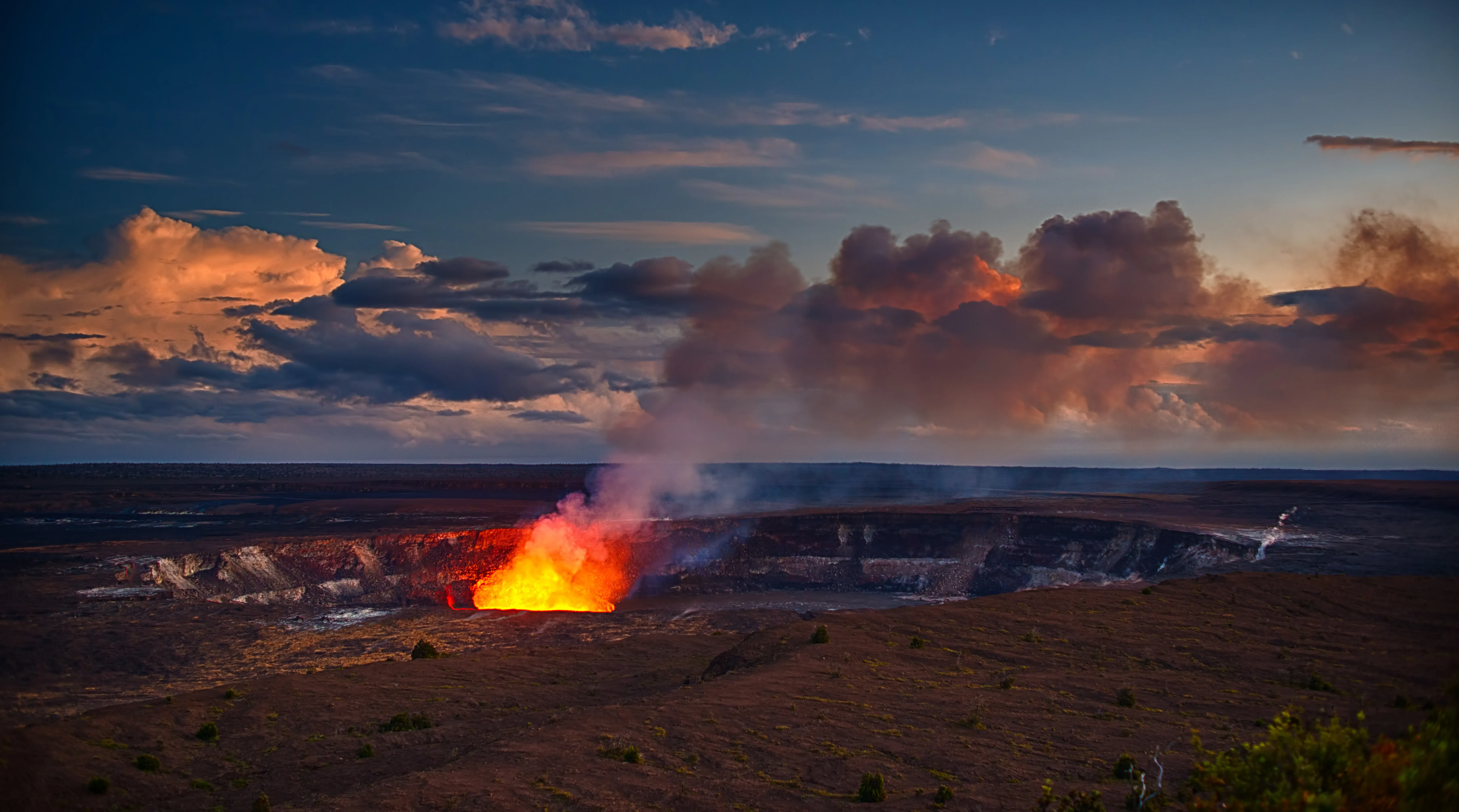
This is the island where you can stand in falling snow in the morning and swim in eighty degree water the same afternoon. Where the beach you drove twenty minutes to reach might hold a dozen people. Where the volcano is not a landmark but a working piece of geology that keeps adding coastline.
What follows is what the island is actually like, the good and the parts that catch people out. If you have already decided and want the logistics, our guide to planning a Hawai’i Island vacation covers when to come, how long to stay, and where to base yourself.
A whole island, and almost nobody on it
Hawai’i Island covers roughly 4,000 square miles. About 200,000 people live on it. That works out to something close to 50 residents per square mile. O’ahu fits close to a million people into under 600 square miles, better than 1,500 per square mile. Maui runs four to five times our density. Even Kaua’i, which most people think of as the quiet one, is more than twice as dense.
Statistics do not book vacations, so here is what that feels like on the ground.
There is no traffic. There is congestion for twenty minutes in Kona at the wrong hour, and that is the whole of it. You will not queue to park at a beach on the Kohala Coast the way you queue on Maui’s west side.
Beaches empty out fast. Hapuna on a Tuesday in October is a long crescent of sand with clusters of people spaced far enough apart that you choose your neighbors. Walk ten minutes from a car park and you are frequently alone.
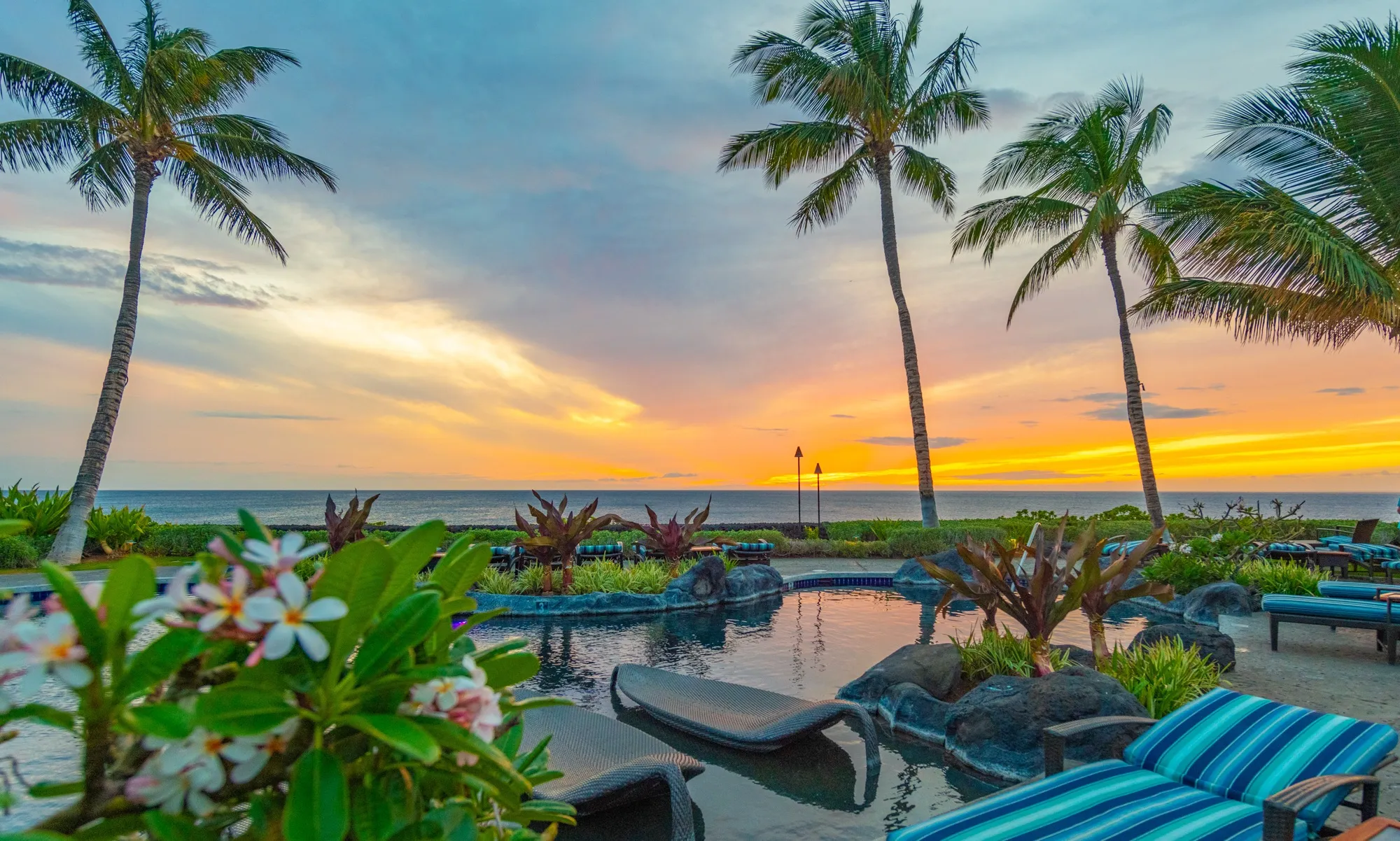
The dark is genuinely dark. There is not enough population or development on this island to wash out the sky, which is a large part of why the world’s astronomers put their telescopes on top of Mauna Kea. From a lanai on the Kohala Coast you can pick out the Milky Way without leaving your chair.
And it is quiet. Not silent, but quiet in the way that surprises people who booked a tropical vacation expecting a soundtrack. Most nights the loudest thing outside is the surf.
The two coasts explain everything
If you remember one geographic fact about this island, make it this one.
Two volcanoes, Mauna Kea and Mauna Loa, sit in the middle of the island at nearly 14,000 feet. The trade winds blow in reliably from the northeast. They hit those mountains, rise, cool, and dump their rain on the east side before ever reaching the west (where we are).
So the windward east, Hilo and Puna, is green, dense, and wet. Hilo is one of the rainiest cities in the United States, comfortably over 100 inches a year. It is beautiful, and it is why the island has waterfalls, rainforest, and botanical gardens.
The leeward west, Kona and Kohala, sits in the rain shadow. Parts of the Kohala Coast see less than a foot of rain a year. That is why almost every resort on this island is on this side, and why the sun is close to a given thing on a beach day.
This is also the honest answer to the climate zone question. You will read that Hawai’i Island holds ten of the world’s fourteen climate zones, or eight of thirteen, or four of five. The number moves depending on which classification system is being cited, and the popular version is repeated far more often than it is checked. The claim that actually holds up is more useful anyway: this island runs from tropical coastline through rainforest, ranchland, and cloud forest to genuine alpine desert above 13,000 feet, and you can drive from one end of that range to the other in about two hours.
Bring a jacket. People do not believe this until they are standing at 9,200 feet at sunset in shorts.
What the beaches are actually like
Here is where honesty earns its keep, because expectations get set by photographs of Maui.
The Kohala Coast has excellent white sand. Hapuna is a wide, deep crescent that would be famous anywhere. Mauna Kea Beach next door is arguably prettier. ‘Anaeho’omalu Bay, the calm palm-lined bay five minutes from Hali’i Kai, is the one most of our guests end up returning to because it is swimmable almost every day of the year.
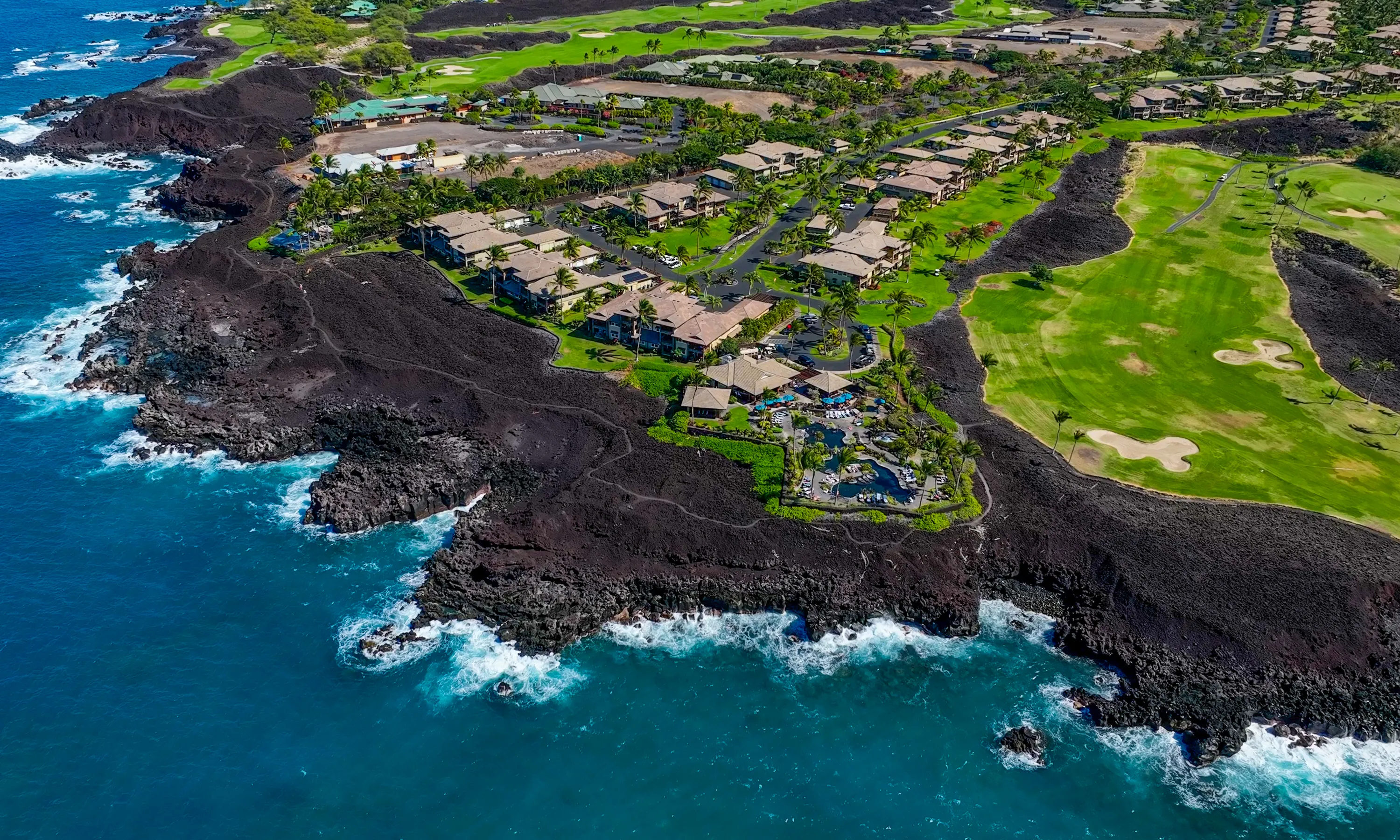
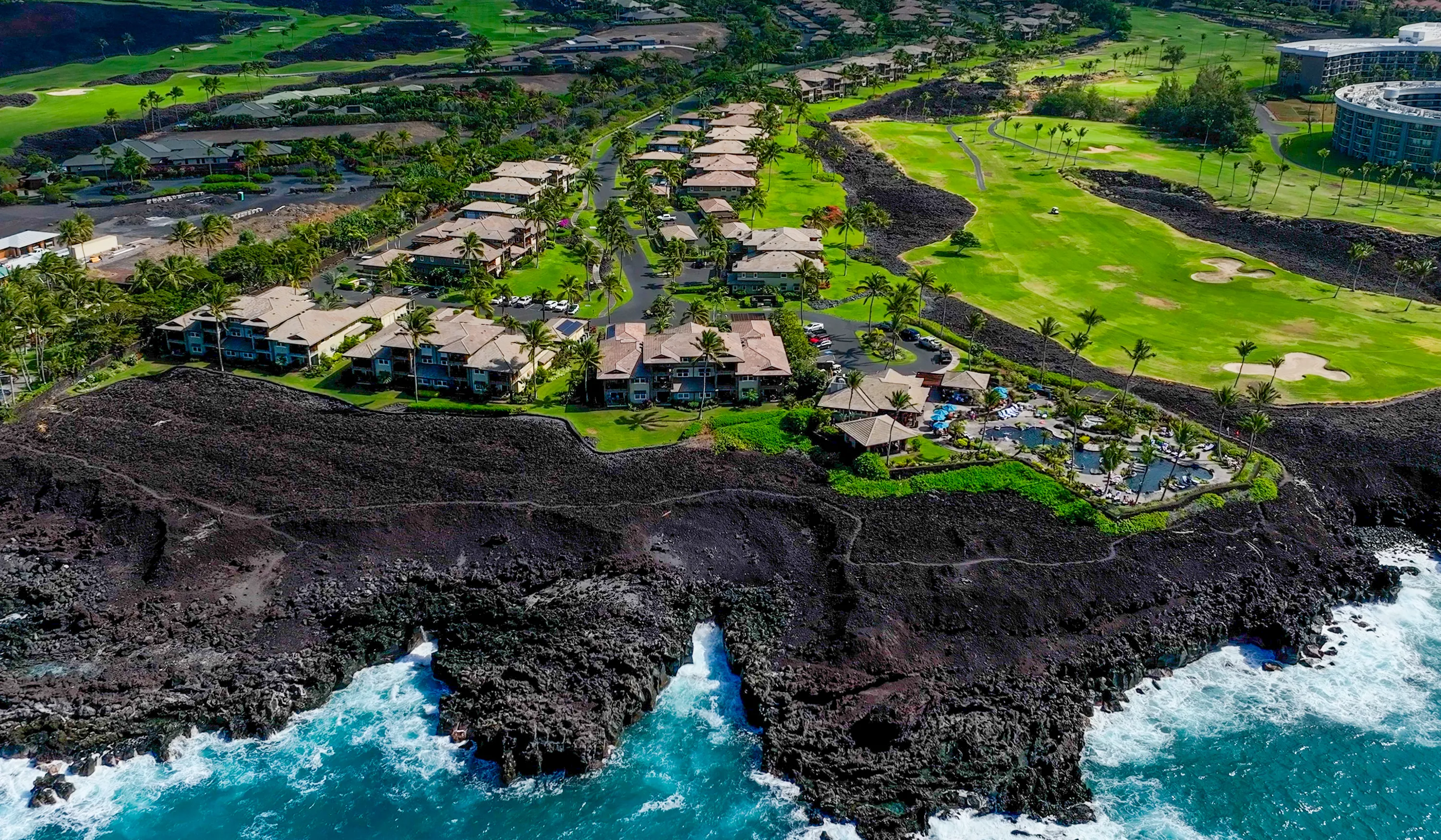
But this island has fewer sandy beaches than Maui does, and that catches people out. Hawai’i Island is young in geological terms, and young coastline is lava. Waves have not had the centuries needed to grind it into sand. Long stretches of shoreline here, including the dramatic one directly below Hali’i Kai, are black rock and spray rather than beach. It is spectacular to look at and it is not somewhere you swim. With that said, you could choose a different beach every day here and still be happy. Many are considered ‘hidden spots.’
What you get in exchange is variety that exists nowhere else in the state. Black sand at Punalu’u, where honu haul out on the shore. Salt-and-pepper beaches where old lava has half-broken down. And Papakōlea, one of only a handful of green sand beaches on Earth, tinted by olivine crystals weathering out of a cinder cone.
The other thing you get is room. Our full rundown of the beaches along this coast covers which are swimmable, which are for snorkeling, and which are for looking at.
Things that exist here and nowhere else in Hawai’i
This is the part of the argument that does not rely on adjectives.
An active volcano you can drive to. Hawai’i Volcanoes National Park is a two to two and a half hour drive from the Kohala Coast, and when there is an active eruption the crater glow after dark is something people plan whole trips around. No other Hawaiian island has this.
Snow above a tropical beach. Mauna Kea reaches about 13,800 feet and gets snow most winters. You can be on sand in the morning and in a parka above the clouds by evening, whether you take a guided summit tour or drive yourself to the Visitor Information Station at 9,200 feet.
The manta rays. The manta ray night snorkel off the Kona coast is one of a very small number of reliable manta encounters anywhere in the world, and it happens off this island’s shore, not on a distant charter.
Coffee that legally comes from here. The Kona coffee belt is a narrow strip of volcanic slope with exactly the right elevation, rain, and afternoon cloud cover. Farm tours are a genuinely good quarter to half day. Kona Coffee is a legal designation of coffee, thats why a farm just a few miles from a true Kona Coffee plantation must call itself “Hawaiian Coffee.”
Green sand, and black sand, and the whales. Humpbacks are in the channel off this coast from November through April, and you do not need a boat to see them. Whale season here is visible from the bluff with a coffee in your hand.
Culture and place
Hawai’i Island is not just the biggest island, it is the historically central one. This is where Kamehameha I was born and where he launched the campaign that unified the islands. That history is still standing and still open to visitors.
Pu’uhonua o Honaunau, the place of refuge, is one of the most affecting historic sites in the Pacific: a sanctuary where those who broke kapu could be absolved rather than executed. Pu’ukoholā Heiau, north of Waikoloa, is the massive temple Kamehameha built on prophecy before taking the islands. Neither is a reconstruction for tourists. Both are real places with real weight. Visitors should remember that all cultural sites here are significant to the Hawaiian people. From Tutu Pele, to Mauna Kea, and beyond. We encourgae our guests to take interest in the Hawaiian culture while being respectful of the locations they visit. Anti-tourism sentiments often bloom from a disregard of culutral sites and cultural customs. Take a genunie interest in the history and the island will share aloha back with you.
A short word on visiting well, because it matters here more than most places. Wear reef-safe sunscreen, which is the law in Hawai’i and also just correct. Give honu, the green sea turtles, a wide berth on the sand and in the water; they are protected and the distance is not a suggestion. Where you see kapu or closed signage, take it literally rather than as a challenge. And treat heiau and cultural sites as you would a church, because that is what they are.
Hawai’i Island compared with Maui, O’ahu, and Kaua’i
Every island in this chain is worth visiting. They are just good at different things, and choosing badly for how you actually like to travel is the most common way people end up disappointed.
| Island | Size and density | Best at | The catch |
|---|---|---|---|
| Hawai’i Island | ~4,000 sq mi, ~50 people per sq mi | Space, variety, volcano, stargazing, uncrowded beaches | Long drives, fewer sandy beaches, little nightlife |
| Maui | ~730 sq mi, ~230 per sq mi | Beaches, the road to Hāna, resort polish, dining | Crowded and expensive, less variety inland |
| O’ahu | ~600 sq mi, ~1,600 per sq mi | City life, history, surf, food, nightlife | It is a city, and quiet is hard to find |
| Kaua’i | ~560 sq mi, ~130 per sq mi | Dramatic green cliffs, hiking, romance | Wet, and much of the island is unreachable by road |
The short version: choose O’ahu if you want a city, Maui if you want a polished beach resort week, Kaua’i if you want scenery above everything, and Hawai’i Island if you want room to breathe and more than one kind of day.
The honest trade-offs
Four things regularly catch first-time visitors out. None of them are secrets, and all of them are easier to handle if you know them going in.
You will drive, and the drives can be long. This island is big enough that “just popping over to Hilo” is a two hour commitment each way. The Volcanoes day trip is a full day, not an afternoon. Plan two or three big excursions in a week, not six.
Vog is real. When Kīlauea is active and the trade winds soften, volcanic haze drifts around the island and settles on the leeward side. Most days it is nothing. Some days it thins the horizon and a sunset looks smoky and vivid. People with asthma should know the word before they arrive.
The east side rains. That is the reason it is so green, and it is why almost nobody books a beach vacation in Hilo. Go there for a day, enjoy the waterfalls, come home to the dry side. Hilo side has more to explore than it gets credit for, with great food, people, scenery, and businesses.
Nightlife is basically the sunset. There are excellent restaurants, a couple of very good luau, and live music at the marketplaces. There is not a strip, a club scene, or much happening after ten. For most of our guests that is a feature. It is worth knowing whether it is one for you.
None of this is an apology. It is the trade you make: fewer amenities per square mile in exchange for far fewer people per square mile.
Where people actually stay
Almost every visitor to this island bases themselves on the west side, and almost all of them on the twenty mile stretch of the Kohala Coast north of Kona International Airport. There are good reasons for the consensus. It is the dry, sunny side. It holds the best swimming beaches. It is about half an hour from the airport. And it sits far enough north to reach Kohala and Waipi’o comfortably while still keeping Volcanoes within day-trip range.
Waikoloa Beach Resort is the practical center of that stretch, with a swimmable bay, a petroglyph field, and two open-air marketplaces all within walking distance, which is unusual on an island this spread out. Hali’i Kai is the gated oceanfront community at the north end of it, where our suites are.
The other question worth settling early is what kind of roof you want over your head, since a condo and a hotel room produce genuinely different vacations on an island where you will be cooking some meals. We worked through that in condo or hotel on the Big Island.
When you are ready to turn all of this into an actual trip, how to plan a Hawai’i Island vacation is the next thing to read: when to come, how many days to give it, how to get here, and what to pack for an island that has five climates and expects you to visit most of them in a week.
Frequently asked questions
How big is the Big Island of Hawai'i?
Roughly 4,000 square miles, which makes it larger than all the other Hawaiian islands put together. It is still growing, since Kīlauea adds land whenever lava reaches the sea. Practically speaking, it means a lap of the island is a serious drive and you should plan around distance rather than assume everything is close.
How many people live on the Big Island?
Roughly 200,000 people across the whole island, which works out to something near 50 residents per square mile. O'ahu, by comparison, packs about a million people into under 600 square miles. That gap is the single biggest reason the Big Island feels quiet.
Is the Big Island less crowded than Maui?
Considerably. Maui carries roughly four to five times the population density of Hawai'i Island and concentrates most visitors along two coasts. On the Kohala Coast you can still find mornings where a beach holds a dozen people, and outside Kona town there is no traffic worth the name.
Does the Big Island have good beaches?
Yes, but fewer of them than Maui, and they are more varied. The Kohala Coast holds excellent white sand at Hapuna, Mauna Kea Beach, and 'Anaeho'omalu Bay. Elsewhere you will find black sand at Punalu'u and one of the world's few green sand beaches at Papakōlea. Much of the coastline in between is lava rock rather than sand, including the shoreline at Hali'i Kai.
How many climate zones are on the Big Island?
It depends entirely on which classification you use, which is why you will see the number given as anything from four to thirteen. The claim you can rely on is simpler: the island runs from tropical beach to alpine desert, and you can drive between them in about two hours.
Is the Big Island worth visiting?
If you want space, variety, and quiet, it is the strongest choice in the state. One island gives you an active volcano, a 13,800 foot summit, rainforest, working coffee farms, and world-class snorkeling. If you want a walkable resort strip with dozens of restaurants and a nightlife scene, another island will suit you better.
Which side of the Big Island should I stay on?
The west, almost always. The Kohala Coast and Kona side are dry and sunny, hold the best swimming beaches, and sit close to Kona International Airport. The Hilo side is greener and far wetter, and works better as a day trip than as a base.
Do you need a rental car on the Big Island?
For anything beyond your resort, yes. There is no practical public transit between the sights, and the distances are real. Within a resort community like Hali'i Kai you can happily go carless for a day or two.